Showing posts with label Special stamps. Show all posts

Thursday, August 13, 2009

Indonesian Traditional Foods 2009


With enormous natural resources that providing high quality ingredients and spices, Indonesia own cultural richness in the form of assorted delicious traditional foods. As an effort to preserve as well as promote culinary heritage of Indonesia, stamp series of Indonesian Traditional Foods issued this year features traditional food of six provinces, namely lhutilinanga from Gorontalo, Gulai Balak from Lampung, Sate Tambulinas from Southeast Sulawesi, Sambal Goreng from Central Kalimantan, Nasi Uduk from Jakarta, and Ikan Bobara Kuah Asam from West Papua. Served with scrambled eggs as well as spreads of chilly and onion in buttery fresh coconut milk has made this previously a common fried eggplant an extraordinary dish from Gorontalo with delicious taste.


Tuesday, July 14, 2009

Love Reading and Writing, 2007

Picture 0108 Reading is a key towards civilization progress. Since the invention of alphabet as a means of written communications, reading ability has becomes essentials for character building and national development. However, illiteracy remains a problem in many countries, in Indonesia about 10,5% people are illiterate, whether in less-developed countries ( research shows that the average of 60% of African peoples are illiterate ). Furthermore, the eradication of illiteracy is not the ultimate battle because another important task is waiting : socializing reading habit.

Reading habit in Indonesia is still something to improve. In Jakarta, for instance, only 200 persons in average visit local library. This contrasts with its highly dense population which reaches more than 10 millions. National library data show the similiar condition. Amongst a few library visitors, less than 20% borrows books. Assumed that reading habit resides in those who borrow the books, it is fair to conclude that reading habit statistics of book reading reach a level of 80%.

The indications of low interest in reading reveals in the consumptions level of newspaper within the society. Ideally, one paper is consumed by ten people. Nonetheless, in Indonesia one paper is printed for 45 people. This ratio is still below those of The Philippines and Sri Lanka at a level of 1 : 30 and 1 : 38. When it comes to proving books and developing interest in reading, Indonesia is still left behind compared to several countries. According to International Publisher Association, Canada, the highest level of book productions belongs to UK with nearly 100,000 book a year. Subsequently, Germany and Japan with 80,000 and 65,000 titles respectively, whereas Indonesia produces only 5,000 titles per year. Improving reading habit more challenging because nowadays it is gradually super sided by watching habit. Generally, reading culture goes through pre literary, literary and post-literary phases. In fact, in many societies, a leap occurs from pre-literary to post-literary.

Picture 0617 Aiming at raising interest on reading and writing in the occasion of National Education Day, The Directorate general of Post and Telecommunications of Indonesia issues stamps series called “Love Reading and Writing”. Stamp designs depict two winning works of National Stamp Design Competition 2006, First Winner Elizabeth Christine Yuwono ( Surabaya) and second winner Suroso ( Yogyakarta ). Complementing it, Pos Indonesia PT issues First Day Cover ( FDC ) for stamp series. FDC design features artwork of the third winner by Djoko Soejanto ( Bandung ).

There are some statements of prominent peoples about reading : “Books are the windows of the world ( anonymous ) ; “You are what are your reading “ (anonymous) ; “The things I want to know are in books ;my best friends is the man who will get me a book I have not read” (Abraham Lincoln ); “There is more treasure in books than in all the pirates loot on Treasure Island…and best of all you can enjoy these riches day of your life (Walt Disney )

Sunday, June 14, 2009

ATHENA 2004: THE 28th OLYMPIC GAMES


A Brief History of Ancient Olympic Games

The decision

to select Athens as the host city of the 2004 Olympic Games

has brought the Olympiads back to their ancient birthplace. It is recorded that the sporting festival dedicated to Zeus every four years began to take place in Olympia in 776 B.C. The Olympic Games were celebrated almost 1,200 years continuously. Situated in the northern part of Greece, Olympia was not actually a town but a grouping of temples and arenas in the fields.

Known as the most important Panhellenic festival, the

Olympic Games were attended not only by athletes but also by leaders, politicians, artists, poets and dealers from every part of Greece. In praise of the glory of the festival Pindar, a Greece poet living in 518-438 B.C., fervently wrote a poem.

“ No celestial body is warmer and brighter than the sun during daylight, as no sporting event is greater than the Olympic Games.”
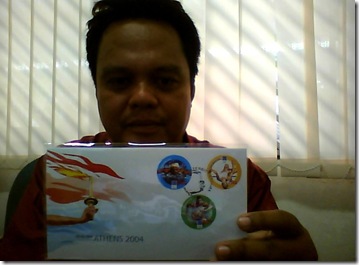

Olympiade Athena 2004


In ancient Greece the athletes competed as individuals, not as teams, on amateur basis. They competed in boxing, wrestling, jump, disc and spear throwing, running and four-horse chariot race. The winners received only garlands of wild olive leaves put on their heads as crowns and were glorified as heroes for life. Besides, they deserved some privileges such as exemption from taxation and front row seats to all public spectacles. In their hometowns statues were erected in honor of the victors. Unfortunately in 393 A.D. the Roman Empire Theodosius declared the Olympic Games corrupt and put an end to them.

Modern Olympic Games

Until German excavation of the 1870’s Olympia was buried owing to earthquakes and floods. Fascinated by the cultural beauty of Greek found in the sacred ground of Olympia, Baron Pierre de Coubertin, a young Frenchman , conceived the idea of Modern Olympic Games as the world’s greatest sporting event that would be held in different capital cities throughout the word every four years. In 1896 the first modern Olympic Games were staged in Athens ruled by new regulations in accordance with the need of modern time. The motto of the modern Olympic Games is “Citius-Altius-Fortius” which means “Faster-Higher

-Stronger”. Due to two World Wars the Olympic Movement failed to stage the greatest world sporting event in 1916, 1940 and 1944. From time to time the number of countries participating in the Olympic Games is growing steadily. In 1952 for the first time Indonesia took part in the Fifteenth held in Helsinki where 69different countries joined the sporting event. Mr.Coubertin and his colleagues like their heirs in the Modern Olympic Movement believed that global sport could become a global platform for peace.

Athena 2004

The 28th Olympic Games will be held on August 13-29,2004 in the Panathinaic Marble Stadium in Athens where the first Olympiads took place. The reconstruction of the historic bilding has been done under the control of Ministry of Ecology and Public Work. More than 200 countries, including Iraq and Afghanistan, will take part in the world sporting competition.

Sunday, May 17, 2009

Indonesian Traditional Food 2006 : the series ( Special Stamps )


Stamp issue with theme traditional food is one effort to introduce variety Indonesian culture to the public.The kind of food that shows in this issue is only some of the variety food in region. Special stamp series traditional food is 3rd issued after the first issued in 2004. Just like previous issue,this time shows kind of traditional food form 4 provinces which represent island in Indonesia territory. Its pempek from South Sumatra,Gudeg from Yogyakarta,Ayam Betutu from Bali , and Aunu Senebre from Papua.

The traditional food that shows on the stamp design generally it could attractfor tourist who want visit.

Pempek (South Sumatra)

Ingredients :
250gram massed Tenggiri fish meat
5 tbsp ice water
100 gram sago flour
2 tsp wheat flour
1 1/2 tsp salt
1 egg yolk

Kuah Cuko (Vinegar Sauce)
150 gram palm sugar
200 ml water
3 pieces red pepper
5 pieces onion
Sufficient salt50 gram tamarind,mixed 50 ml hot water,filter

How to make :
Mix Tenggiri fish with ice water then pour with sago flour and wheat flour step by step until it mixed. Add egg yolk and salt,stir until mixed and dough can be shape/roll.Shape the dough as you wish (if you want to make pempek kapal selam (submarine pempek),you shape it like big egg then make hole and fill with quail egg or chicken egg,covered it again.And if you make pempek lenjeran,you shape it like pipe,then wrap by banana leaf.)
Boil water in pan,then fill and boil pempek dough in boiling water until it cooked,take and drain it.
Kuah cuko :Mixed all the ingredients,cooked in medium heat,until boiled,stir a while.
Fried pempek with a plenty hot cooking oil until it looks goldfish. Cut pempek as you like,served on plate, pour slice of cucumber and yellow noodle for kuah cuko. It tastes good when its still hot.

Gudeg (Yogyakarta)

Ingredients :
1 1/2 kg
1 tbsp tamarind
2 tbsp palm sugar
6 laurel like leaves
4 glass coconut milk
Sufficient salt
Sufficient cooking oil

Massed spices
8 onions
4 cloves garlic
1/2 tsp coriander,fried
1/2 tsp caraway seed,fried
10 cundle nuts

How to make :
Cut young jack fruit size 4cm then boiled in water until it cooked,take and drain it. Mixed tamarind and palm sugar with water.Heat cooking oil,fried massed spaces with laurel like leaves,water,palm sugar and tamarind water. After is smelled,put in jack fruit,stir and add with salt.Put it coconut milk until it cooked (coagulate and oily).

Ayam Betutu (Bali)

Ingredients :
1 whole chicken,weigh about 2 kg (4 1/2 lb)
18 shallots,peeled,cut in half,and sliced
3 stalks lemon grass,finely sliced
6 candle nuts,chopped
5 cm (2in) ginger,peeled and chopped
8 cm (3in) fresh turmeric,peeled and chopped
8 cm (3in) kencur root,peeled and chopped
1 tsp black peppercorns,crushed
5 bird's-eye chillies,slices
1 tsp coriander seeds,crushed
2 tsp dried shrimp paste,roasted,and coarsely crushed
1 1/2 tbsp salt
3 tbsp oil
Banana leaves,greaseproof paper or aluminium foil for wrapping

How to make :
Wipe the chicken dry and set aside.Combine all ingredients,except banana leafs in a bowl and mix well.Rub the chicken outside with this mixture and fill the center of the chicken with the remainder.Close open chicken with satay skewer.Wrap in several layers of banana leaves,greaseproof,paper or foil and steam for 50 minutes.Transfer chicken to a moderate oven and bake at 180o Celcius (350o Fahreinheit)for 30 minutes.
Remove banana leaves,cut chicken meat up in small pieces and serve with stuffing.When cooked,the meat should be so tender that it falls of the bones.

Aunu Senebre (Papua)

Ingredients:
1 kg small fish
1/2 coconut scrapes
15 taro leaves and stalks

Spices:
1 tbsp salt

How to make:
After the fish being wash with small chopped taro leaves and stalks then boil it until cooked.Served the fish,taro leaves and stalks mix with salted coconut scrapes.Steamed.